
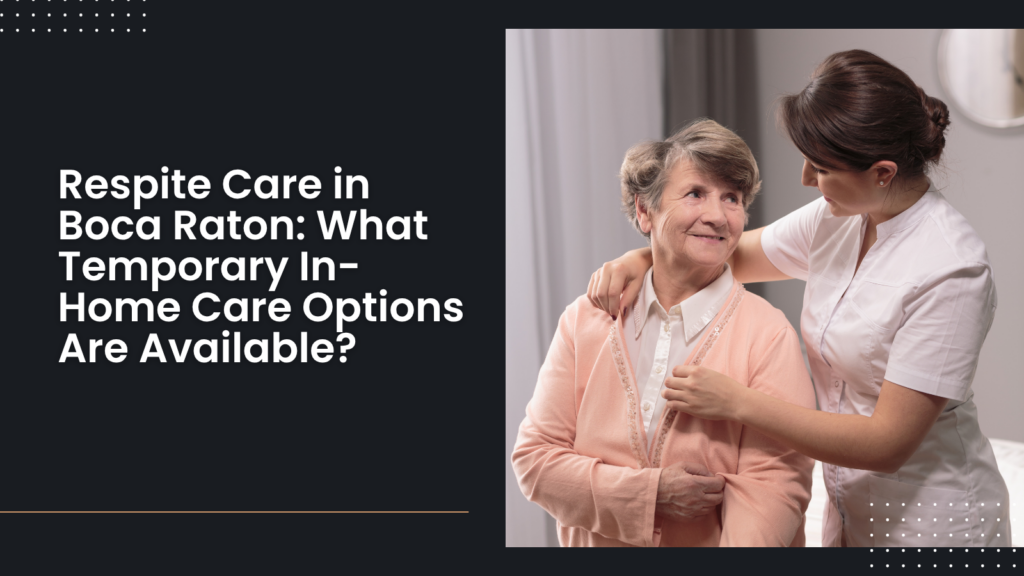
Family caregiving can be rewarding, but it often requires significant time and energy. Many caregivers in Boca Raton balance personal responsibilities, work commitments, and the daily needs of a loved one. Over time, this can become overwhelming.
Respite care offers temporary in-home support that allows caregivers to take a break while ensuring their loved ones continue receiving quality assistance. Understanding the available options can help families find the right balance between care and personal well-being.
What Is Respite Care?
Respite care is a temporary caregiving service that provides relief for family caregivers. Professional caregivers step in for a few hours, overnight, or longer periods, depending on individual needs.
The goal is to maintain continuity of care while allowing primary caregivers time to rest, handle personal obligations, or focus on their own health.
Why Respite Care Matters
Caregiver burnout is a common challenge among family caregivers. Regular breaks can help prevent physical and emotional exhaustion.
Stress reduction: Caregivers gain time to recharge and focus on personal needs.
Improved health: Time away supports better physical and mental well-being.
Sustainable care: Regular relief makes long-term caregiving more manageable.
When Families Typically Need Respite Care
Many situations can create a need for temporary support.
Work obligations: Caregivers may need assistance during work hours.
Medical appointments: Coverage is available while caregivers attend appointments.
Travel plans: Temporary care helps during vacations or family events.
Unexpected emergencies: Professional support fills temporary caregiving gaps.
Available In-Home Respite Care Options
Respite services can be customized to fit a family’s schedule and care needs.
Hourly care: Ideal for errands or short breaks.
Daily care: Assistance throughout the day while caregivers work.
Overnight care: Support and supervision during nighttime hours.
Extended care: Temporary coverage through services such as 24/7 Home Care.
Services Provided During Respite Care
Respite caregivers can assist with many daily activities.
Personal care: Help with bathing, dressing, and grooming.
Companionship: Social interaction and emotional support through Companionship & Travel Support.
Meal preparation: Assistance with meal planning and preparation.
Mobility support: Help with walking and moving safely throughout the home.
Respite Care for Memory-Related Conditions
Families caring for loved ones with dementia or Alzheimer’s disease often benefit from respite services. Consistent supervision and structured routines can reduce caregiver stress while promoting safety.
Professional caregivers trained in Memory Care can provide meaningful support in a familiar environment.
Support During Recovery Periods
Temporary care is often useful after surgery, illness, or hospitalization. Individuals recovering from procedures or health events may require additional assistance with daily activities.
Services such as Orthopedic & Surgical Recovery and Stroke Recovery Care can complement respite care plans.
In-Home Care vs. Facility-Based Respite Care
Families often compare different respite care options before deciding.
In-home care: Individuals remain comfortable in familiar surroundings.
Adult day programs: Structured daytime activities outside the home.
Residential respite care: Temporary stays in care facilities.
Many Boca Raton families prefer in-home care because it allows loved ones to maintain established routines.
Cost Factors to Consider
Several factors influence respite care costs.
Duration of care: Longer visits generally cost more.
Frequency: Recurring schedules may differ from occasional services.
Level of assistance: Specialized care needs can affect pricing.
Discussing care goals with a provider can help families identify the most appropriate solution.
Helpful Planning Tools for Families
Preparing for respite care improves the experience for everyone involved.
Care schedules: Outline daily routines and preferences.
Medication lists: Keep prescriptions up to date and accessible.
Emergency contacts: Maintain current phone numbers and medical information.
The Family Caregiver Alliance offers valuable caregiver resources and educational materials at https://www.caregiver.org.
Common Mistakes to Avoid
Families can improve outcomes by planning ahead.
Waiting too long: Seeking support early can prevent burnout.
Ignoring caregiver needs: Personal well-being remains important.
Lack of communication: Clear expectations help ensure consistent care.
Respite Care in Boca Raton and Palm Beach County
Families throughout Boca Raton and Palm Beach County increasingly use respite care to support aging in place. Local caregivers understand seniors’ needs and can adapt services as circumstances change.
Respite care may also be combined with specialized services such as Parkinson’s Care or Diabetes & Dialysis Care for additional support.
Benefits for Caregivers and Loved Ones
Respite care creates benefits for everyone involved. Caregivers gain time to rest and manage personal responsibilities, while care recipients continue receiving attentive support.
Regular breaks can strengthen family relationships and improve overall quality of care over the long term.
Get Trusted Respite Care Support in Boca Raton
When caregiving responsibilities become demanding, professional respite care can provide valuable relief. Flexible in-home support allows caregivers to recharge while ensuring loved ones remain safe and comfortable.
Florida Concierge Home Care provides personalized respite care services for families throughout Boca Raton and Palm Beach County.
📍 Palm Beach, FL
📞 561-678-0111
📧 info@flconciergehomecare.com
Learn more about available support through our Respite Care Services page or contact our team to discuss a customized care plan.
Frequently Asked Questions
Families often have questions before arranging respite care services.
What is respite care for seniors?
Respite care provides temporary support for seniors while family caregivers take a break. Services can be arranged for a few hours, overnight, or longer periods.
How often can respite care be scheduled?
Care can be scheduled as needed, whether occasionally or on a recurring basis. Flexible options allow families to choose a plan that fits their routine.
Can respite care help someone with dementia?
Yes. Caregivers trained in memory support can provide supervision, companionship, and assistance with daily activities while maintaining familiar routines.
When should families consider respite care?
Families should consider respite care when caregiving begins affecting their health, work responsibilities, or overall well-being. Early support can help prevent caregiver burnout.